
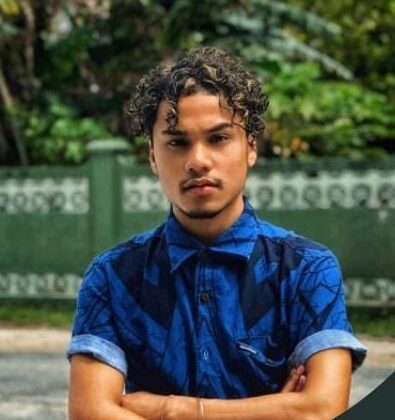
This blog post summary of this year’s arts camp was written by our Youth Coordinator Johnny “Jobod” Silk, who took lead in coordinating the program. Jobod is in his last year at the College of the Marshall Islands. This is Jobod’s second time facilitating our arts camp – he was a participant in the first arts camp as a high school student.
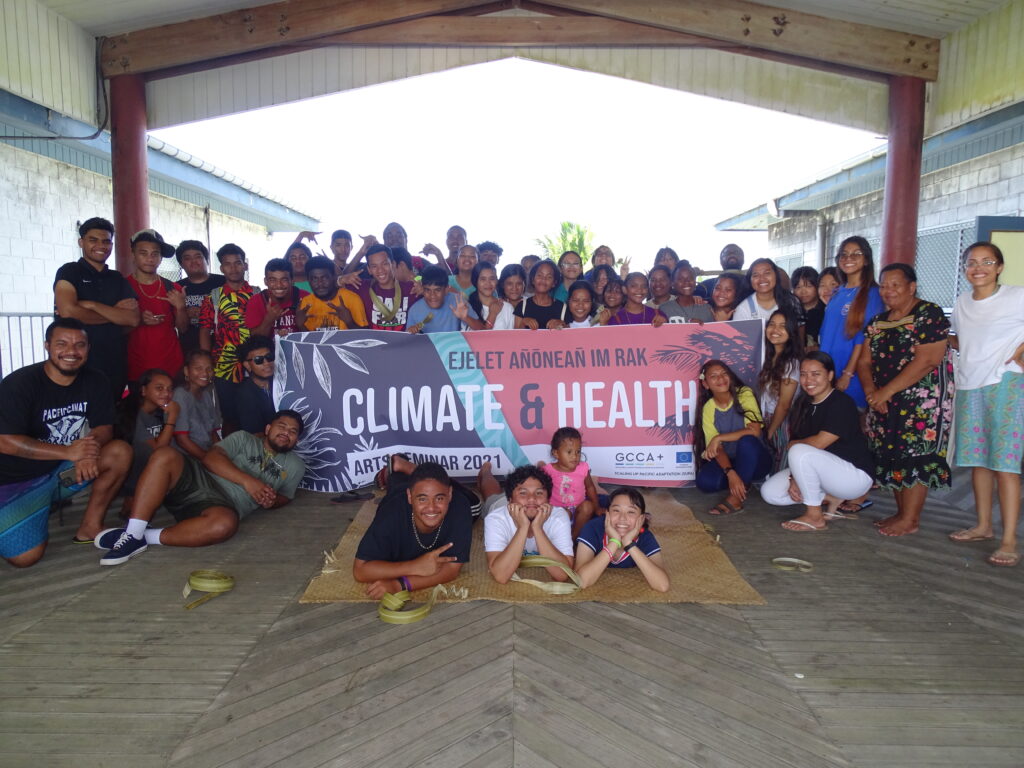
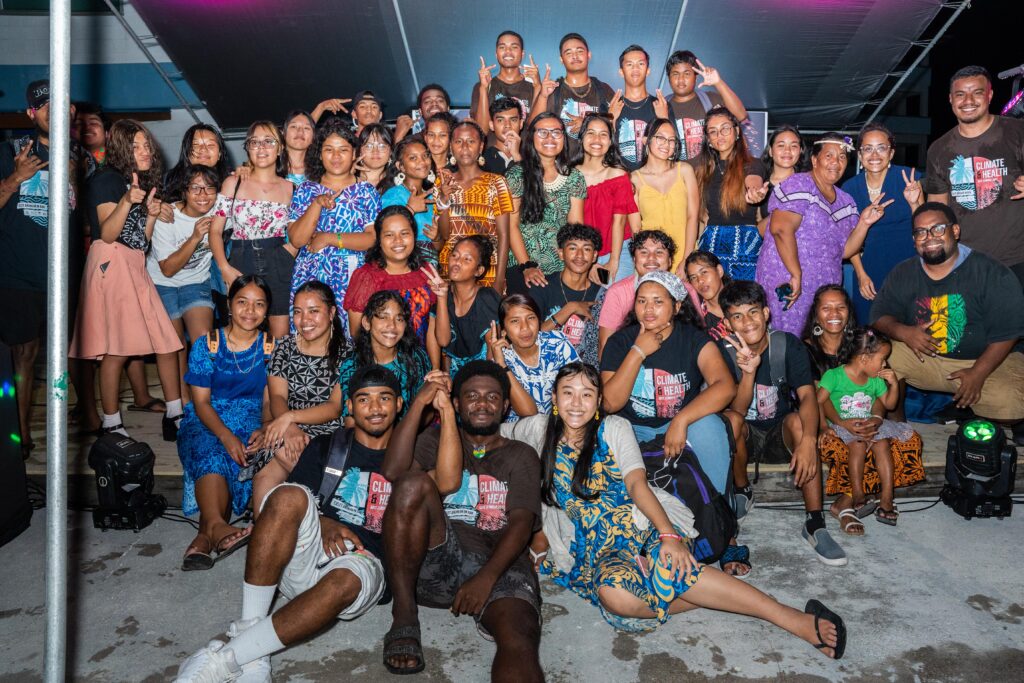
The second Climate Change and Health Arts Seminar was held during the last two weeks of July 2021 at the College of the Marshall Islands. While there were many fun activities and games throughout the seminar, our group of 39 students were able to learn how climate change affects different aspects of our health.The first three days of the first week were filled with informative presentations from different members of various organizations on Majuro followed by an art workshop at the end of the day to reflect on the information we learned.
Kirsten Maddison and Helene Jacot des Combes from the Climate Change Directorate introduced the topic of climate change and its effects on different areas of health in the Marshall Islands. Our Director Kathy Jetnil-Kijiner followed their presentation with an explanation of what the RMI is doing to prevent the impacts of climate change. Kathy explained the difference between adaptation and mitigation and what each working group has been doing on a national level. After that, she jumped into her poetry workshop with the students to conclude the day.
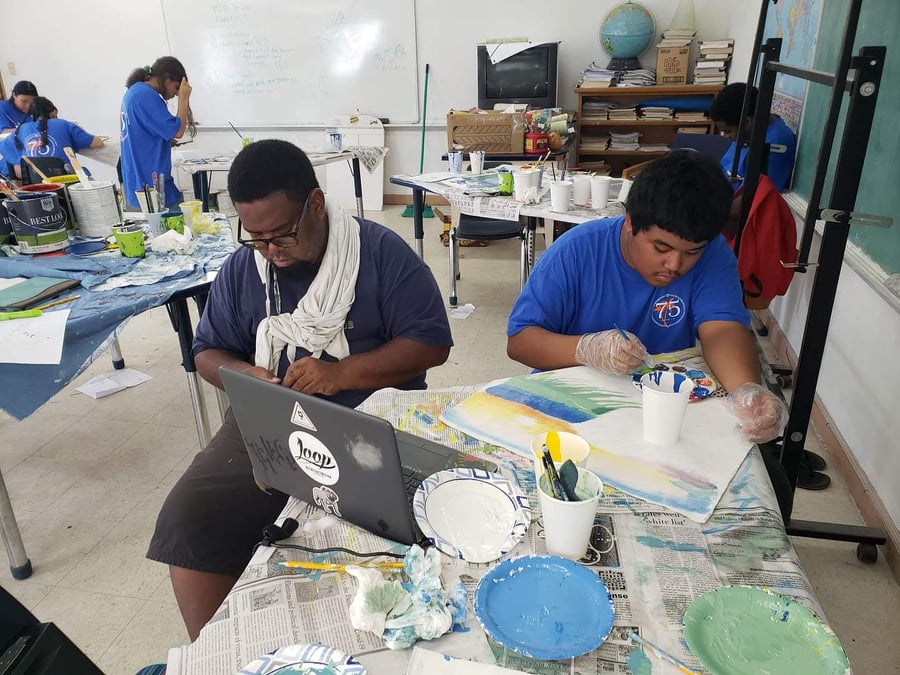
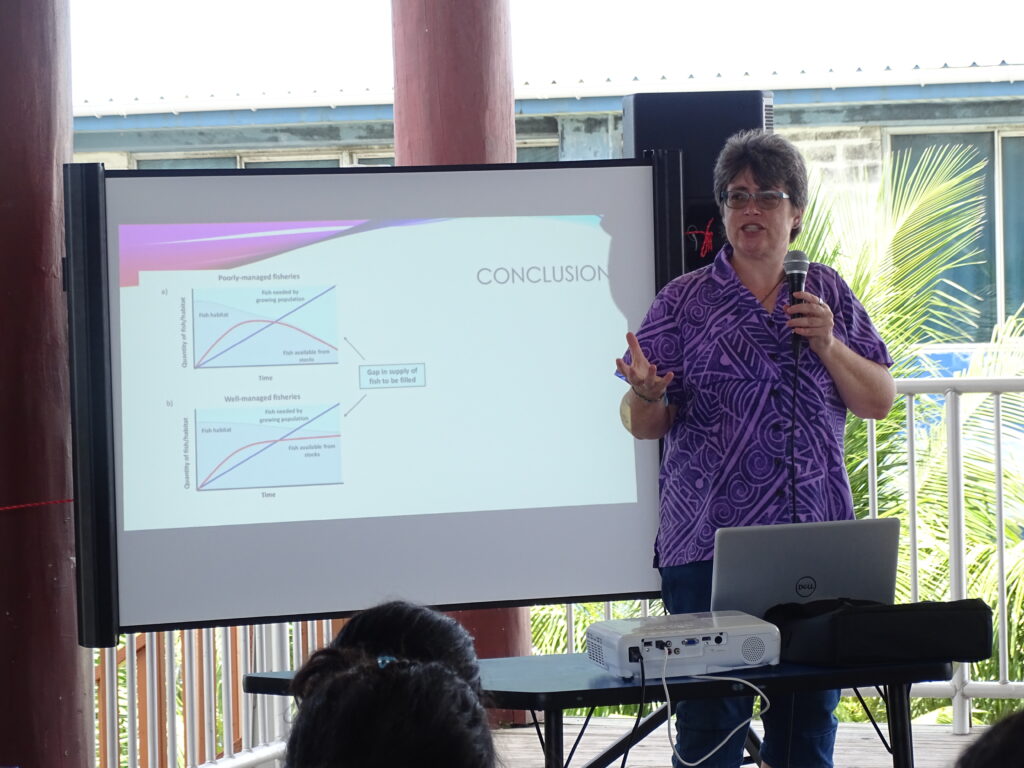
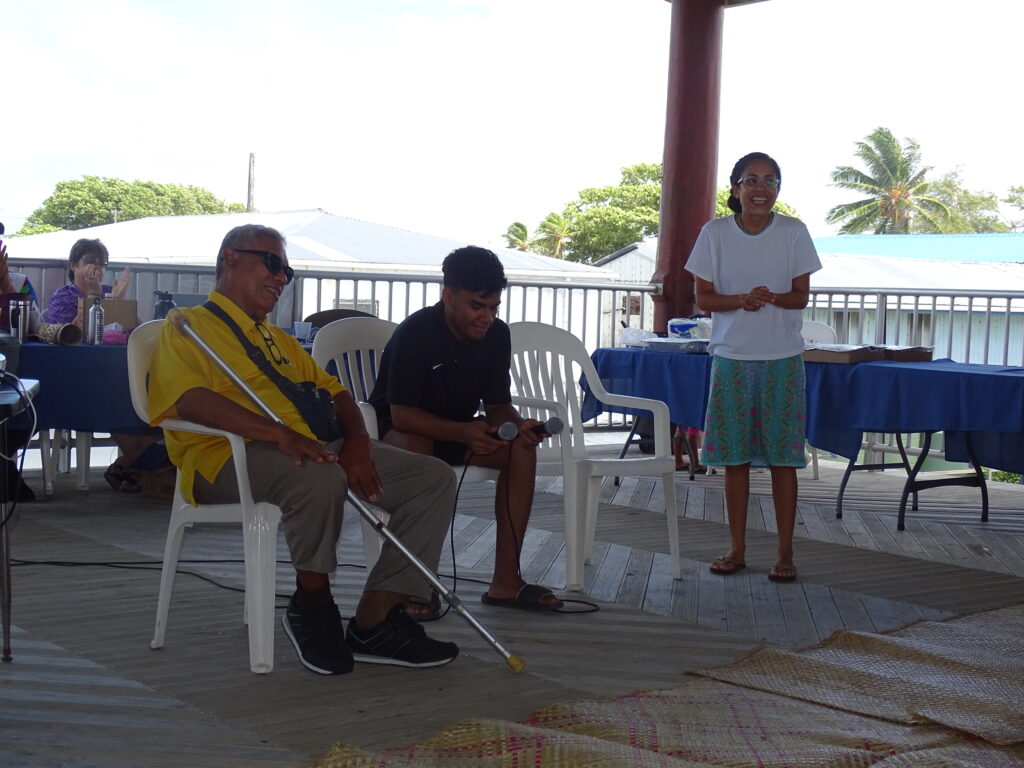
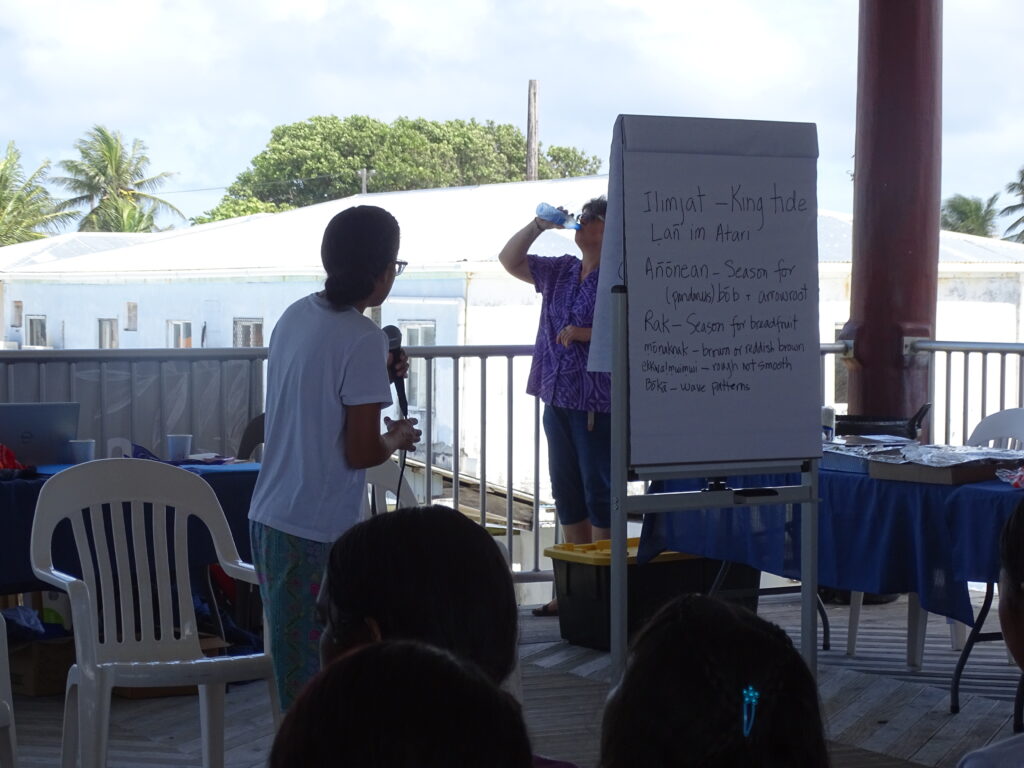
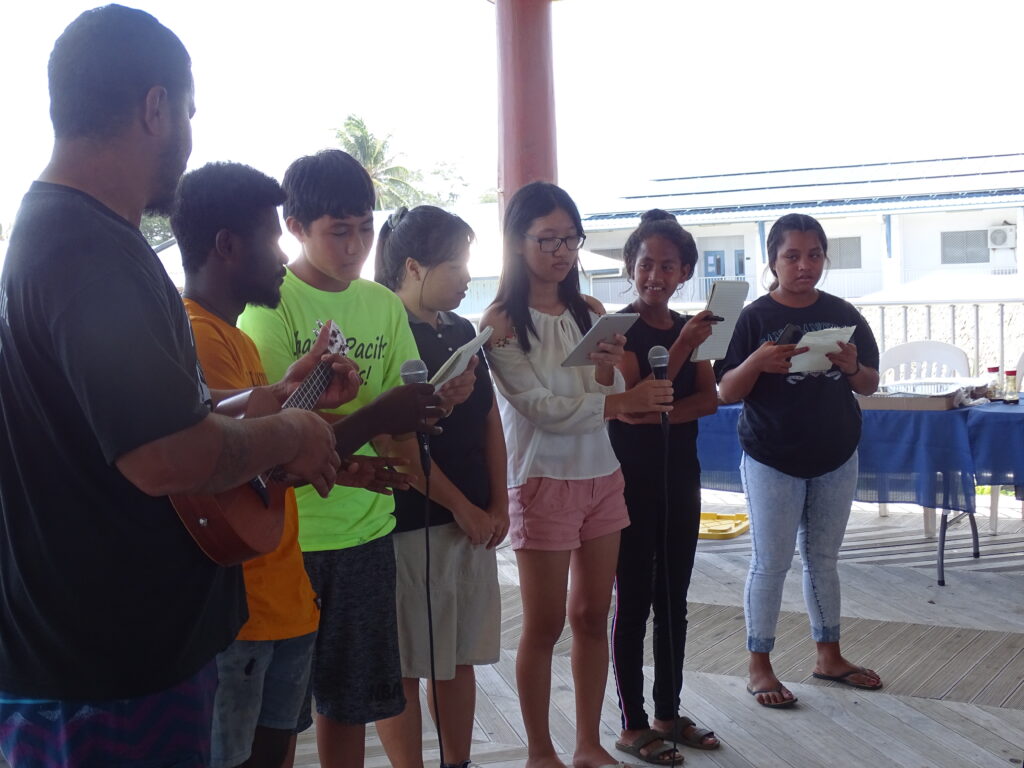
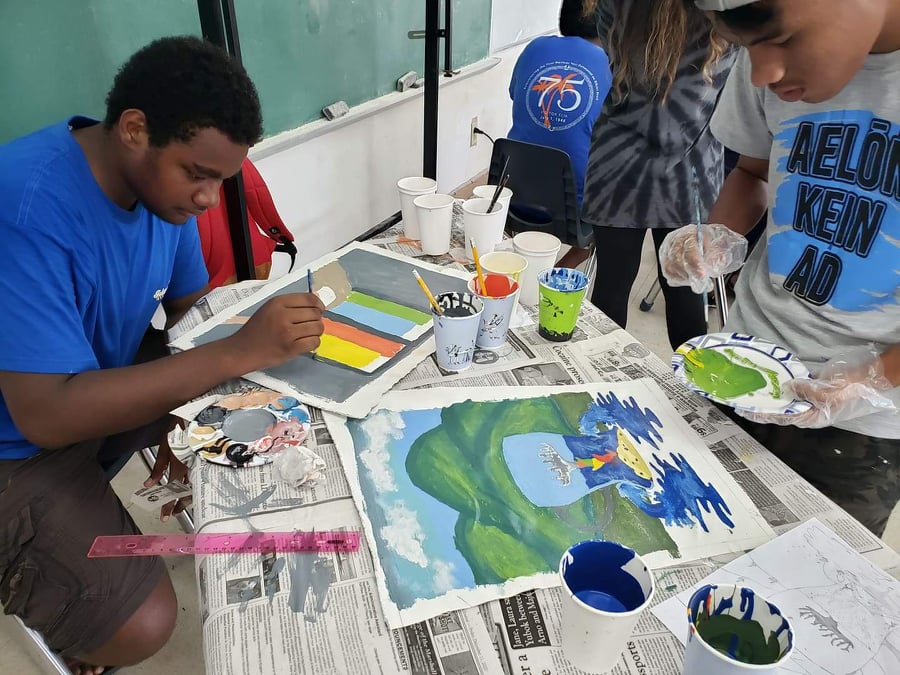
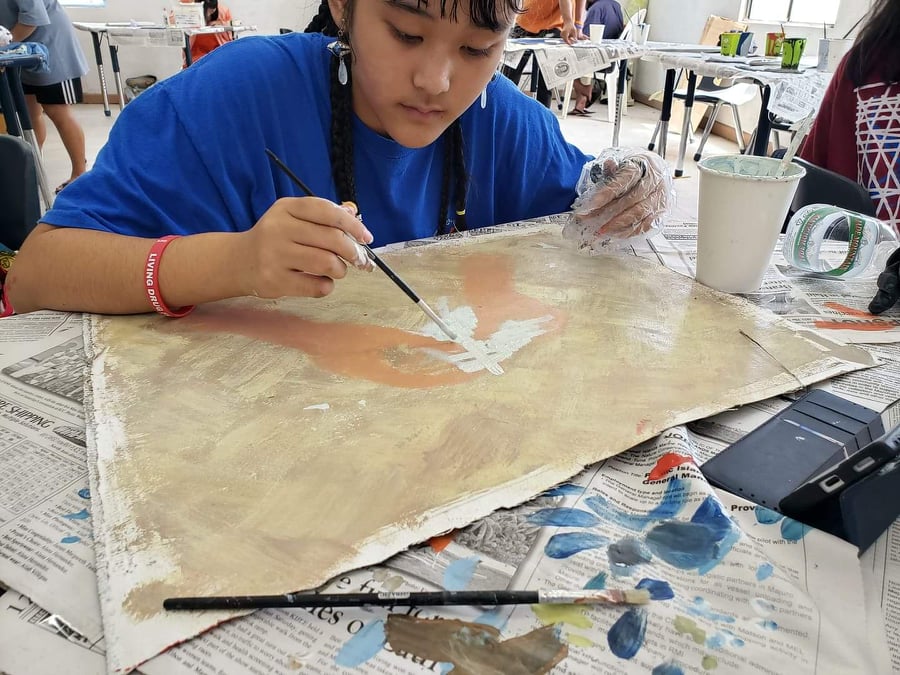
On day 2, Dr. Underwood shared some light on the issue of Climate and Covid as well as disease outbreaks in the RMI such as Dengue Fever. Dr. Holden followed in the afternoon with a presentation on Climate Change and its effect on mental health. After his presentation, painting instructors, Aravapo “Apo” Leo and Debby Schutz held a painting workshop in collaboration with Barab Harris and Timothy Kabua, the songwriting instructors, where the students were asked to decipher a painting prepared by Debby in the form of a song, which they were to perform the next day, as we ran out of time.
The third day consisted of a talk with two of the members of the Culture Learning and Language Commission (CLLC) on the effects of climate change on Marshallese culture and traditions. Randon Jack from the Ministry of Resources and Development followed straight after with a detailed description of how climate change affects agriculture. In the afternoon, Barab presented a song he wrote in collaboration with Timothy inspired by Debby’s painting. The students presented their interpretations of the painting after. Susan Jieta, our weaving instructor led a workshop in the afternoon which linked the presentations from the morning to how climate change affects weaving.
The rest of the days that followed were “work days”; the students busied themselves working on their paintings, writing their songs, and mapping out their weaving processes. The students were not the only ones who were busy. While they were working on their projects, the interns were running around coordinating the little things like lunch, supplies, invitations, ice breakers, and prepping for the showcase. The interns were split into the different art classes- Tristen Horiuchi contributed his musical talents in the songwriting class, the artistic Eleas Beaj was in the painting class, and Rosenet Timius and Jollia Peter committed to learning from masterweaver Susan in the weaving class. I served as the “floater”, moving among the classes when needed.
On Monday of the next week, the interns moderated the “Arts as a Career Panel” featuring the art instructors. The purpose of the Panel was for the students to ask the instructors what it’s like to pursue art as a full time career (Apo as an art teacher at Coop, and Susan as a masterweaver) as well as what art as a side gig is (Kathy as part time poet and Barab as a part time singer). The panel was a success as the students were able to learn as much as they can in the short time they had together in the panel.
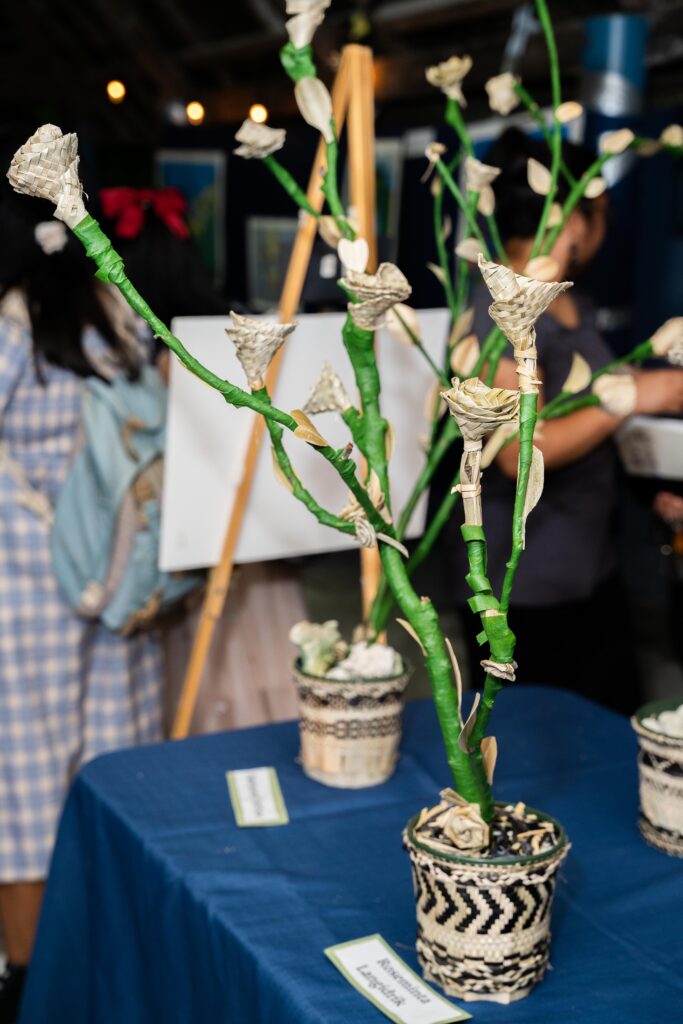
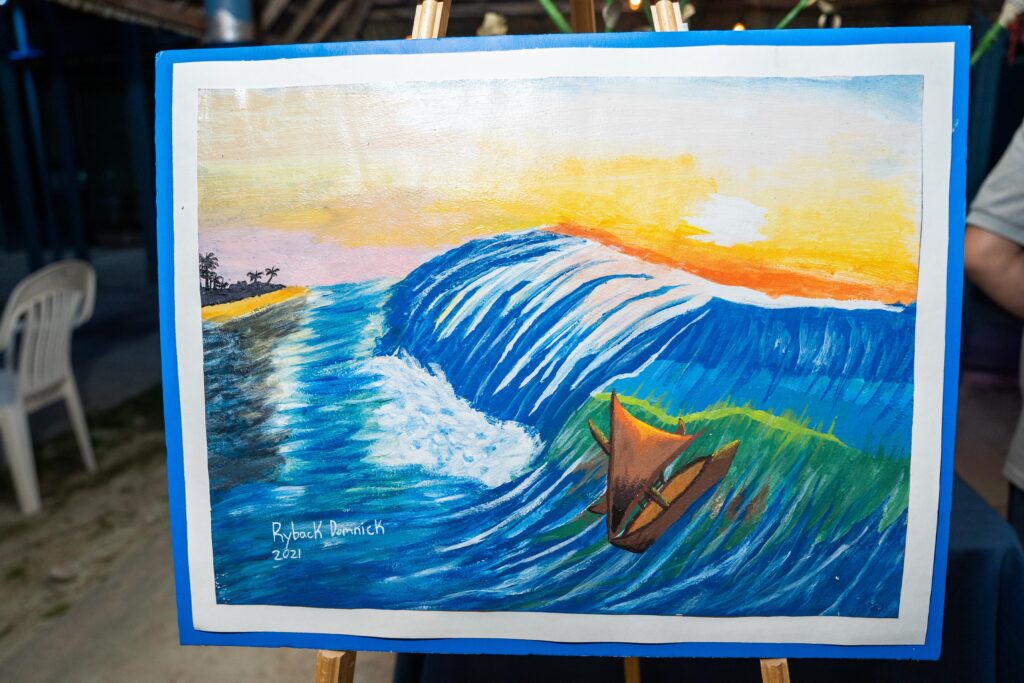
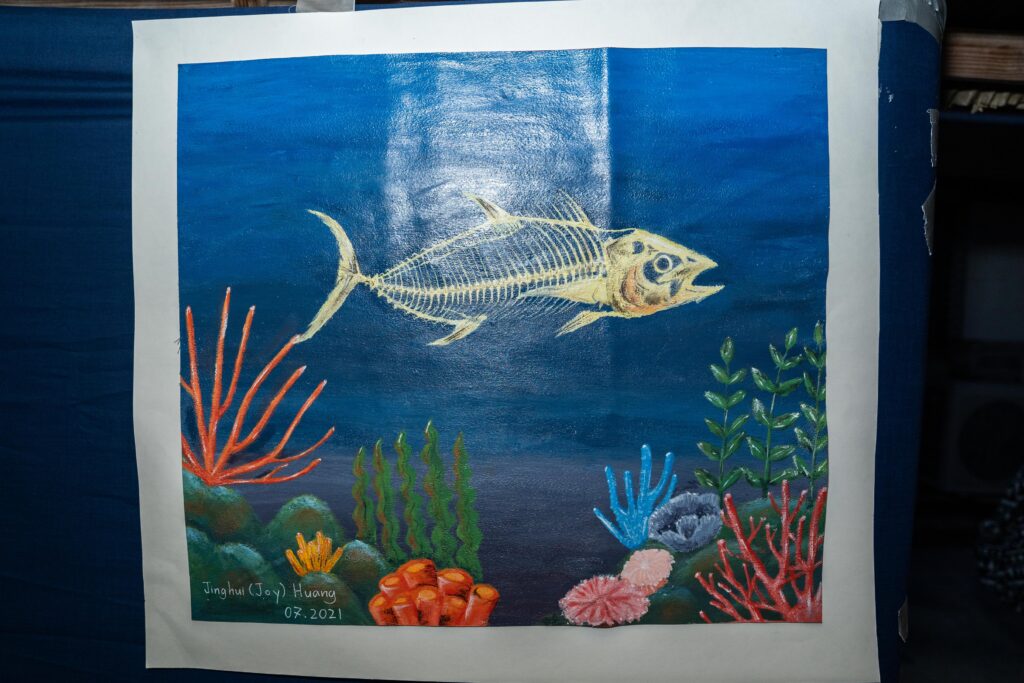
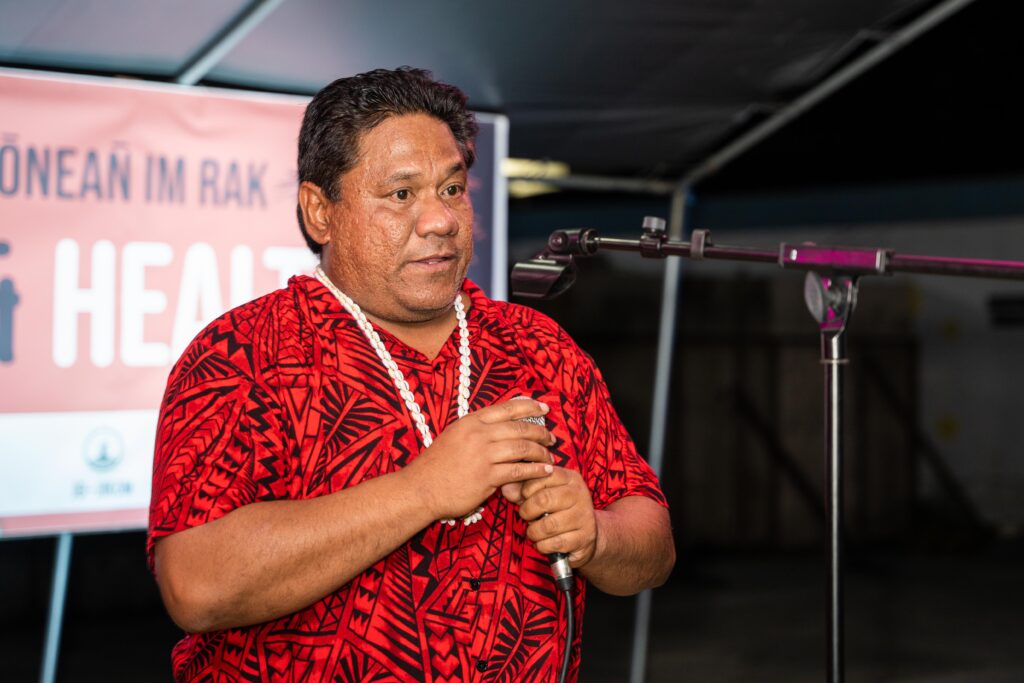
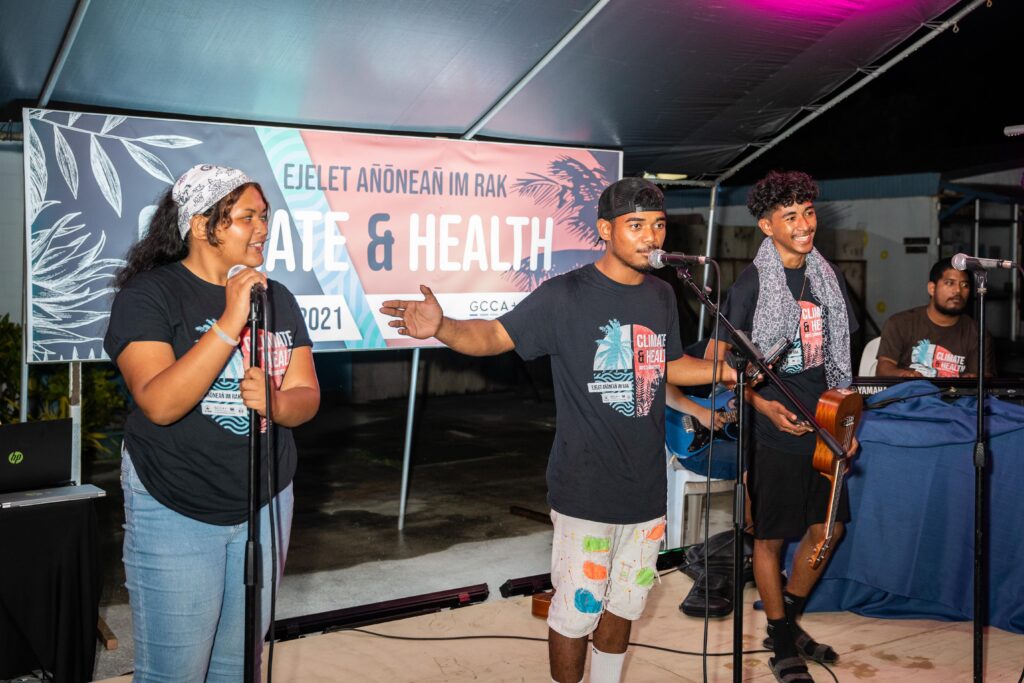
The students returned to their arts for the remainder of the week. On Friday night the students’ works were presented to family and other members of the community including the Australian Ambassador, members from the US Embassy, Minister of Health and Human Services Bruce Bilimon, and Aur Senator Hilda Heine . The painters’ canvases and the flower pots woven by the weaving class were auctioned off and sold. The songwriters performed their songs, which ended the night in high spirits.
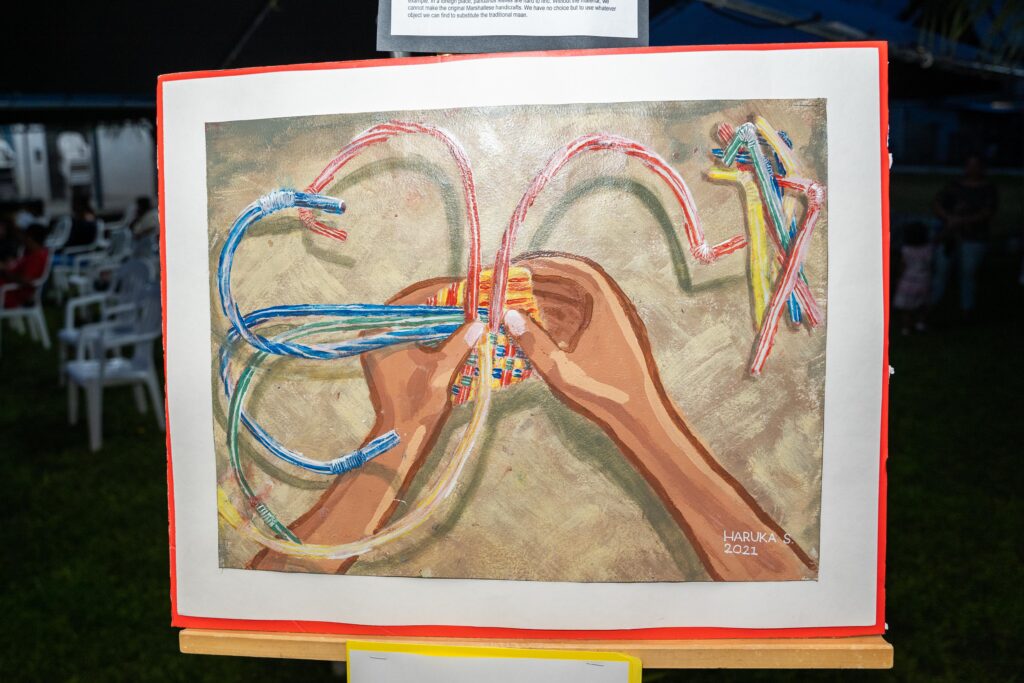
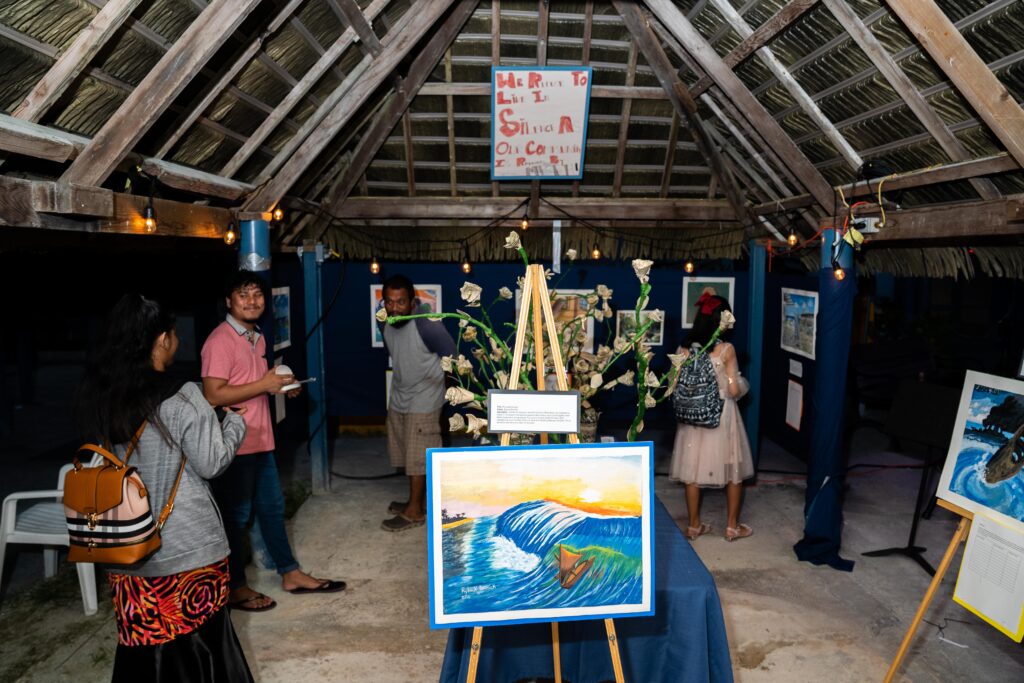
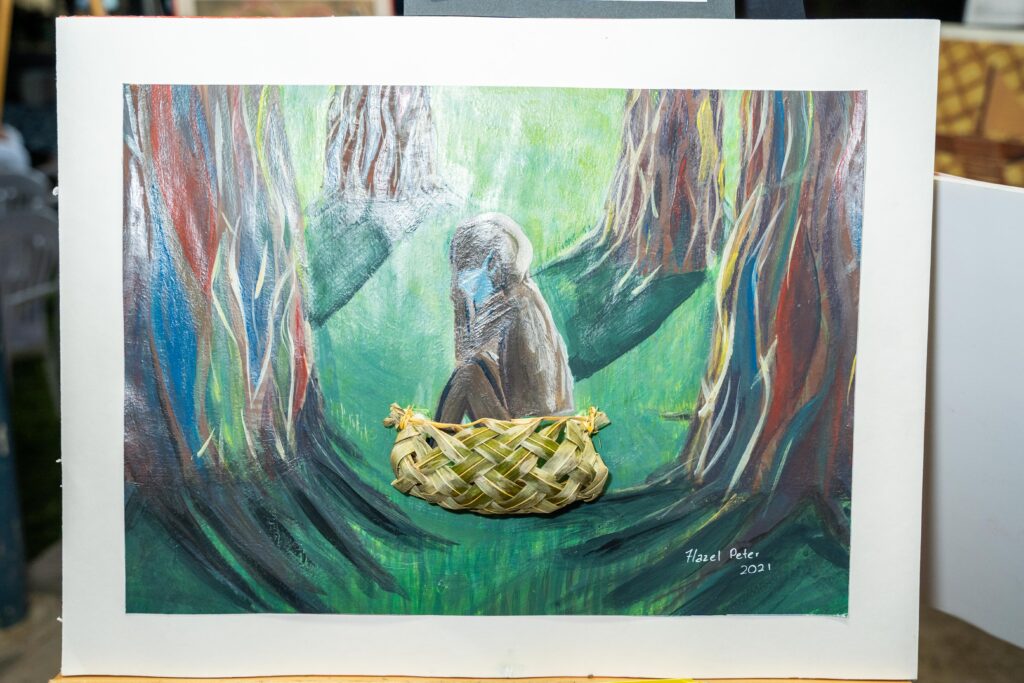
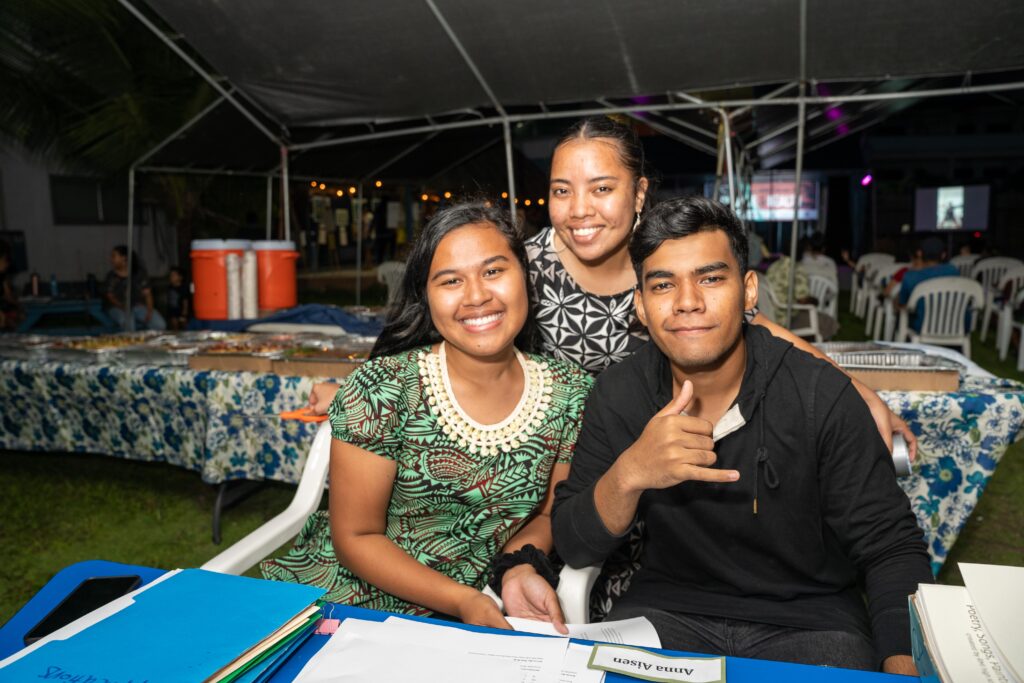
The workshop was concluded on Saturday with a picnic at Kolalen Island to celebrate the young artists’ hard work. There was good food, fun in the water, as well as a friendly game of “pikwor”.
The workshop, although stressful, was a good learning experience, not only for the students, but also for the interns. Having heard the presentations from the different organizations expanded my knowledge on the impacts of climate change on health- whether that be mental health, food security, or disease outbreaks. Because these topics can be pretty depressing, the fact that the students were able to transform the information they learned into meaningful art pieces was satisfying.
Jo Jikum would like to thank MOHHS, GCCA + SUPA, WHO, CMI, CMI Media, Chewy Lin, Deputy Secretary Francyne Wase Jacklick, Climate and Health Coordinator Tamar Capelle, all the presenters, and especially the students’ parents and families for their contributions to another successful program.
To close out, please enjoy some of the paintings from this summer that were turned into posters. You can click on the files below to download and browse. The posters include the artist and their schools, as well as the meanings behind them written in the students’ own words below. These posters have been printed and are being distributed to schools and organizations, as a way to promote our student’s work as well as to engage the public on the importance of climate change and health.
