
This past March, Jo-Jikum had an opportunity to assist in the Nuclear Remembrance Day organizing here in the RMI.
Nuclear Remembrance Day is an important opportunity for Marshallese to commemorate the legacy of nuclear testing conducted by the United States on our island. It’s an important yearly ceremony that honors those who died due to the testing, as well as the forced sacrifices of the 4 atolls in particular that were deemed irradiated by the US – Bikini, Rongelap, Utrik, and Enewetak atolls.
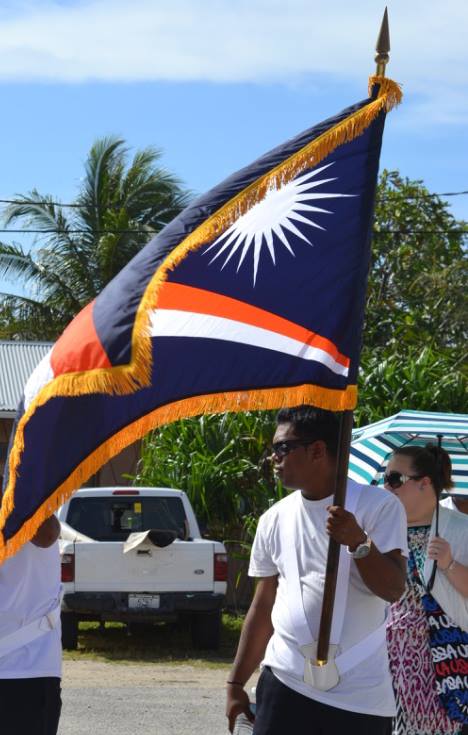
pc: Milan Loeak
This history is a contentious one, filled with broken promises, destroyed documents, unheeded testimonies by countless Marshallese to the US, as well as incredibly high death tolls due to radiation related illnesses.
For my part, I’ve continually created poetry performances that engaged with different aspects of the nuclear issue. You can view some of these poems here.
Here at Jo-Jikum, we wanted to make sure that our organization is just as involved in nuclear issues as climate and environmental issues. We recognize the many intersections between nuclear and climate issues – the ways in which Marshallese lives have been viewed as dispensable during the nuclear testing program, as well as the ways we’re viewed as dispensable today in the era of climate change and rising sea levels. There is also the simple fact that the nuclear testing program had major impacts on our environment – from completely vaporizing islands off the map, to irradiating our islands so that it’s no longer safe to live on, to dumping and leaving nuclear waste in our islands.
With all this history still alive and unresolved today, days like the Nuclear Remembrance can feel hollow, especially when the US has yet to apologize, clean up the nuclear waste in Enewetak, or properly address and compensate our islands for the destruction.
But there’s also small, insidious ways in which the nuclear legacy impacts us, at the local level. And being a part of the organizing committee illuminated these concerns. “Jejamin meloklok im jejamin ebweer” was this year’s theme, meaning “We will never forget, we will never give up.” In addition to participating in the national nuclear march, Jo-Jikum also coordinated art workshops and an open mic for youth.
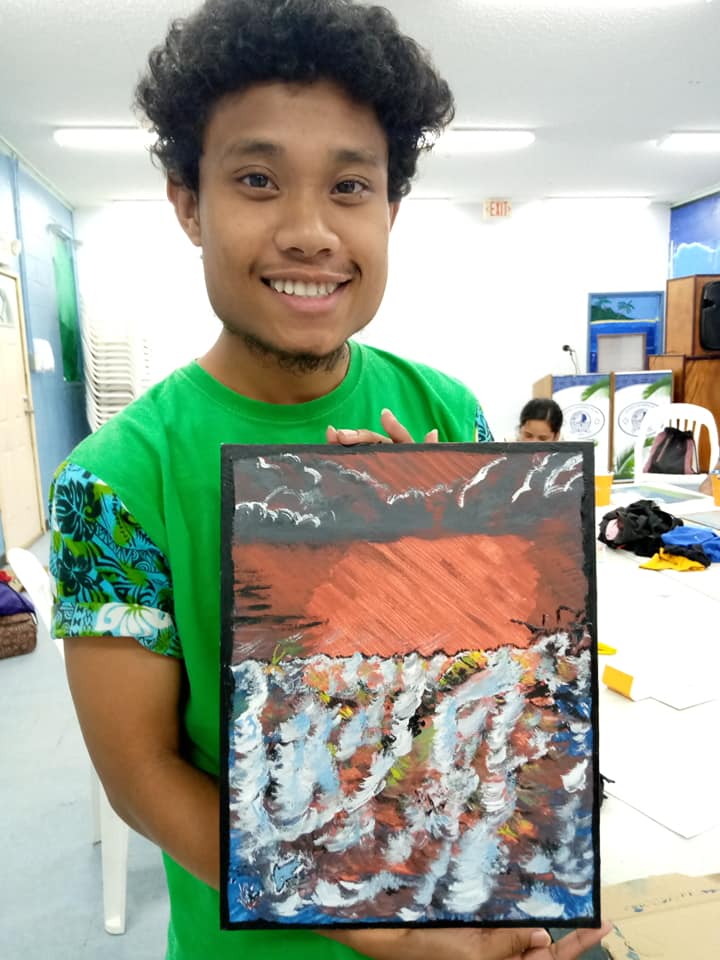
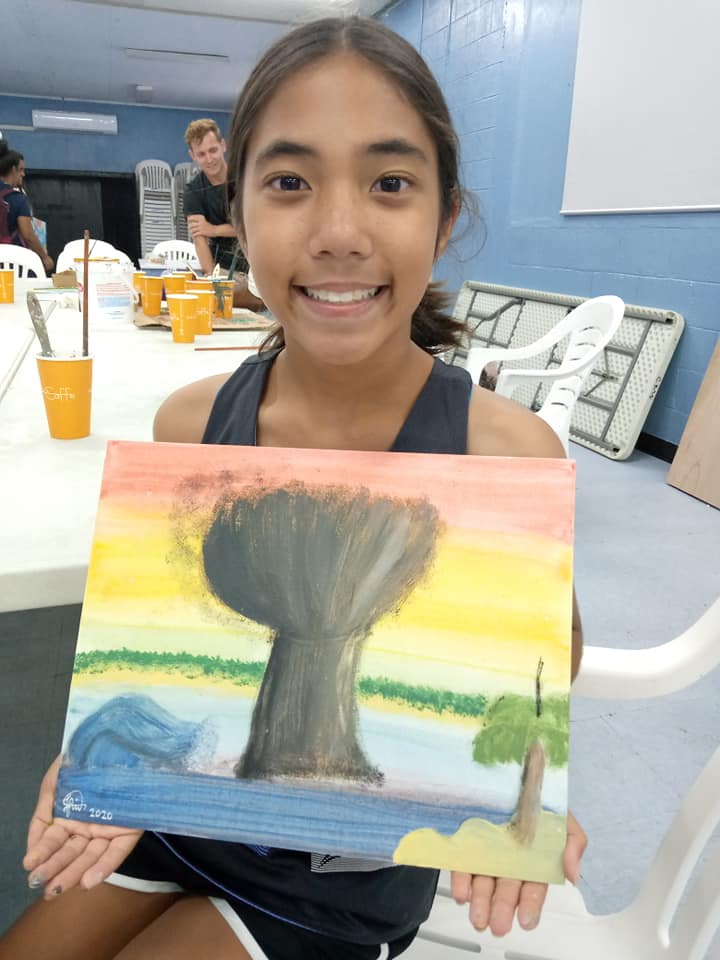
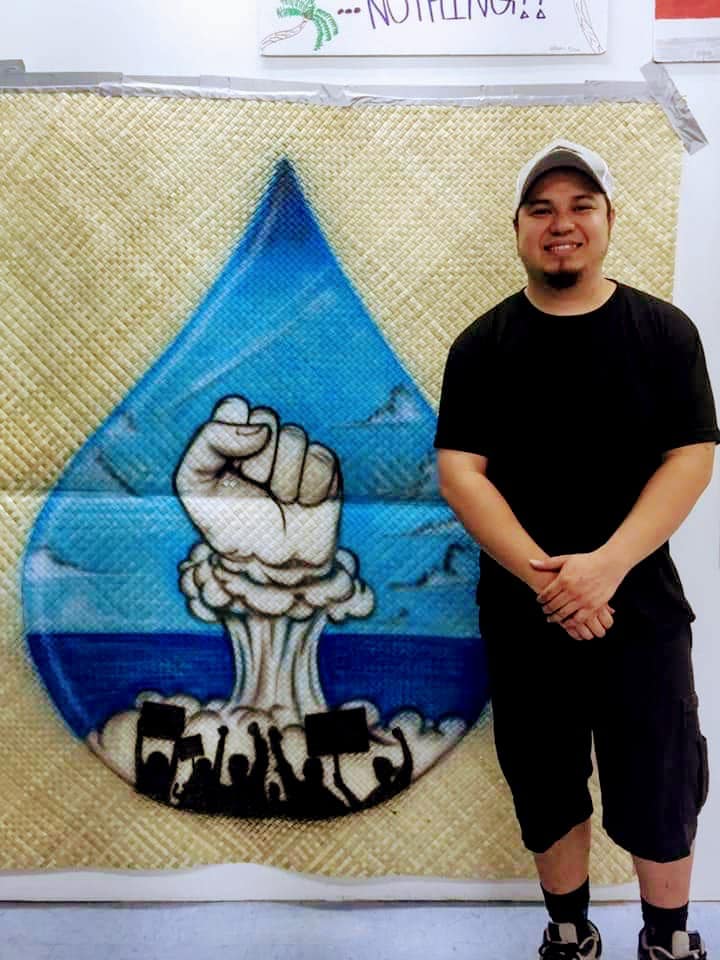
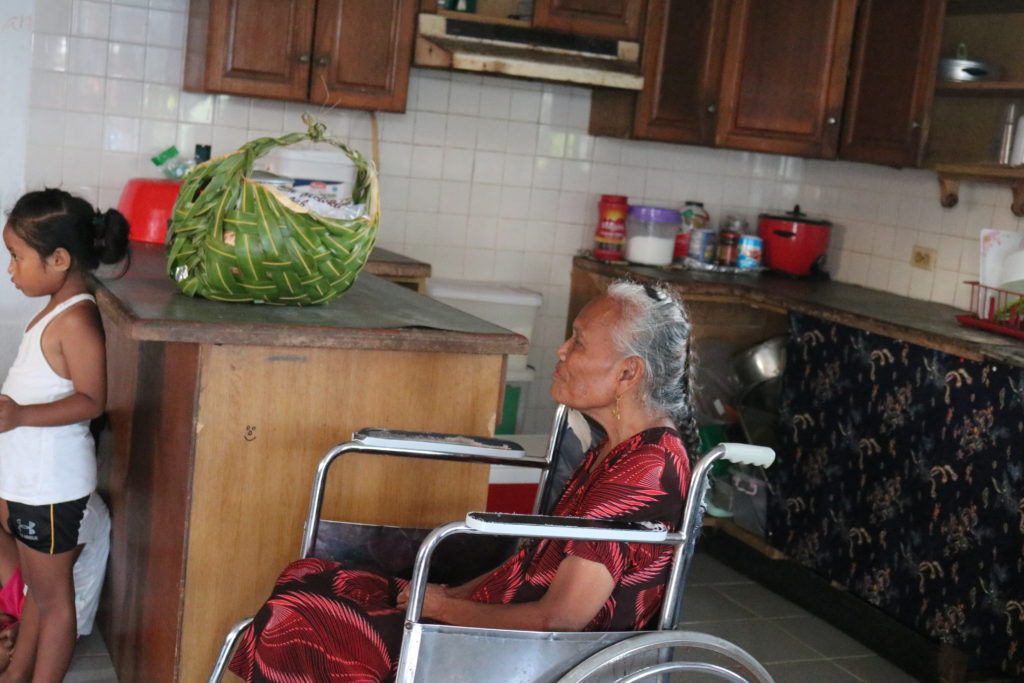
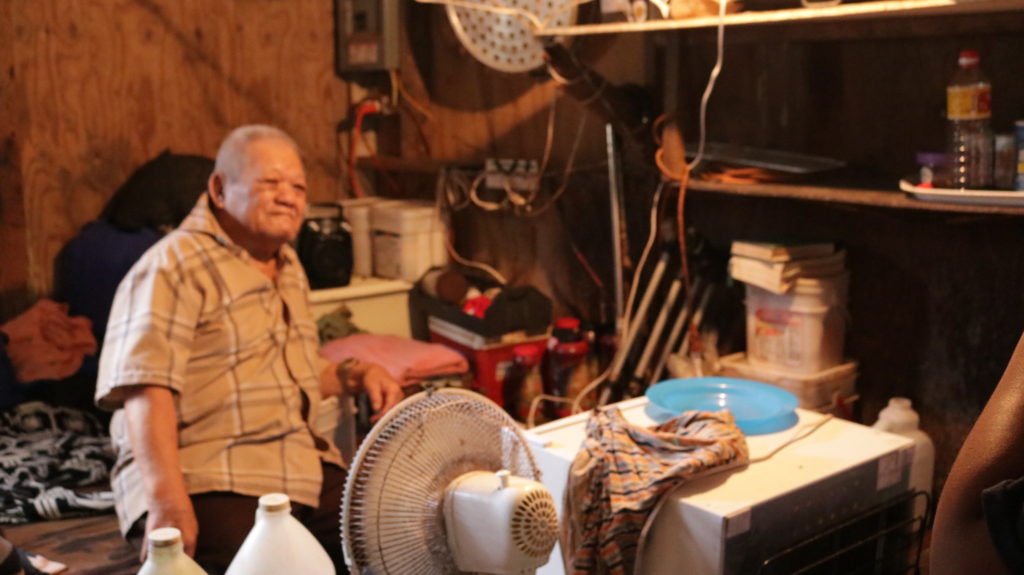
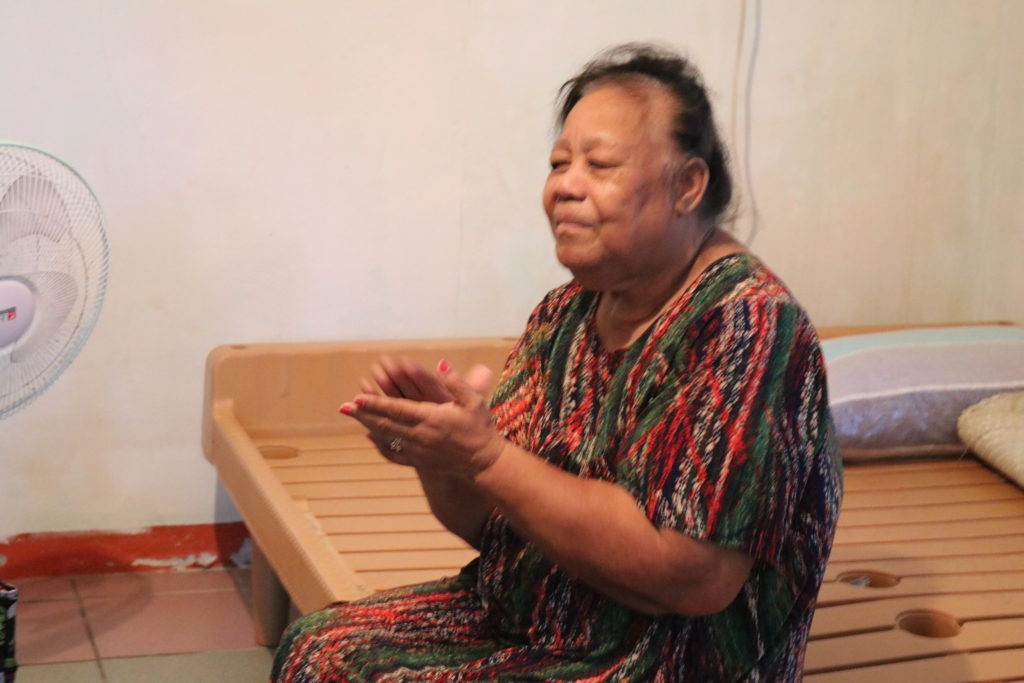
One concern was our elders – those who were a part of the original communities that were affected by the testing, many of whom have passed away since then. We discussed with the organizing committee how many of these elders are brought out to the ceremony during the Nuclear Remembrance Day – some are asked to speak, while some are a part of the crowd. Some have difficulty moving due to illness and age. We’d heard complaints about what the purpose was in these ceremonies – why did we bother when nothing has changed? Or how in the past these elders were left to stand in the hot sun, with no shade or chairs due to poor planning. We wanted to find another way to honor them.
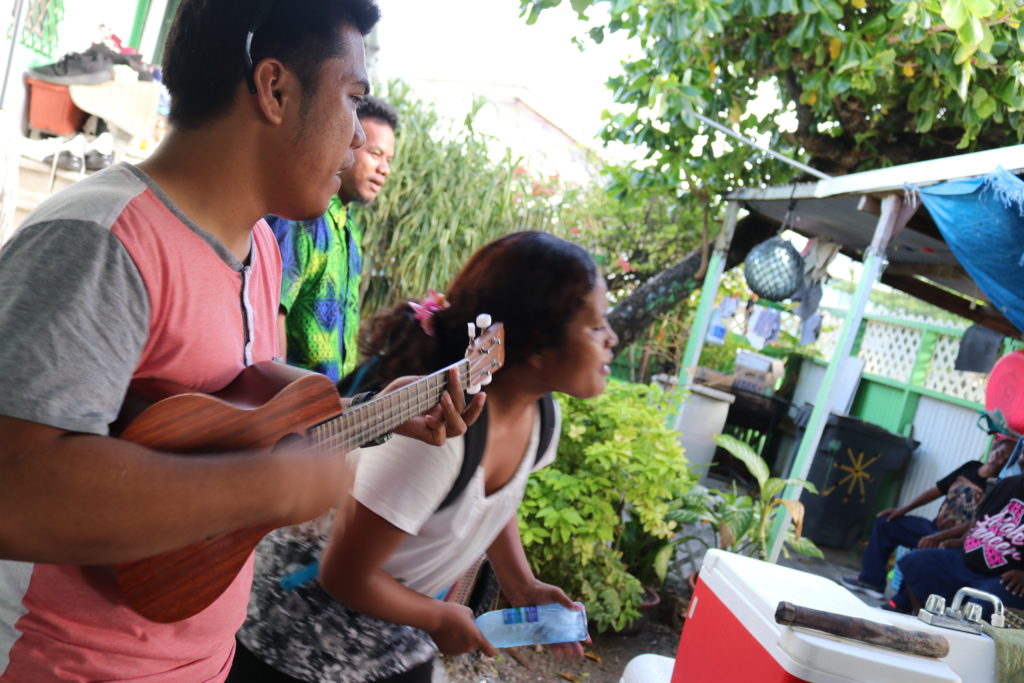
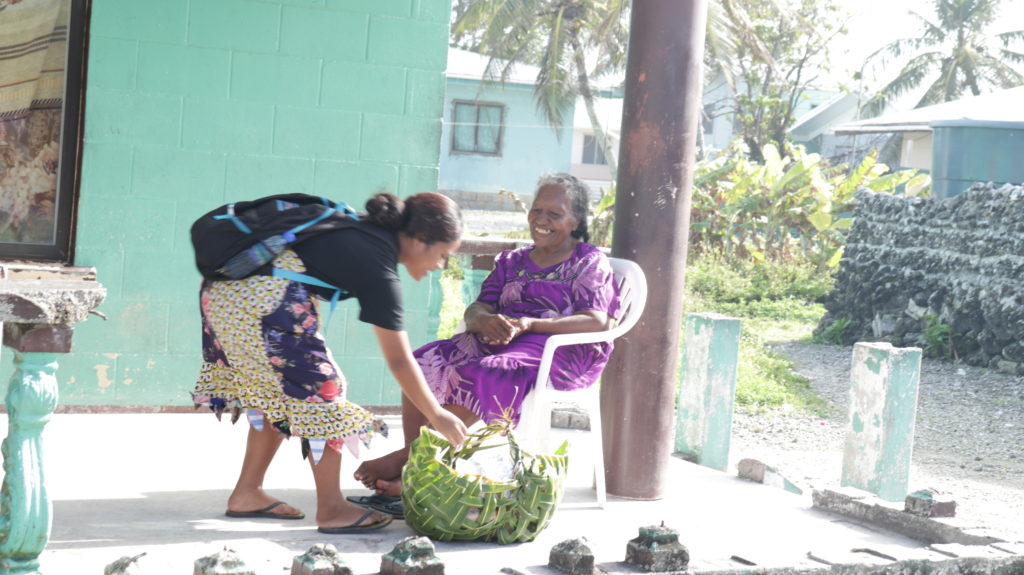
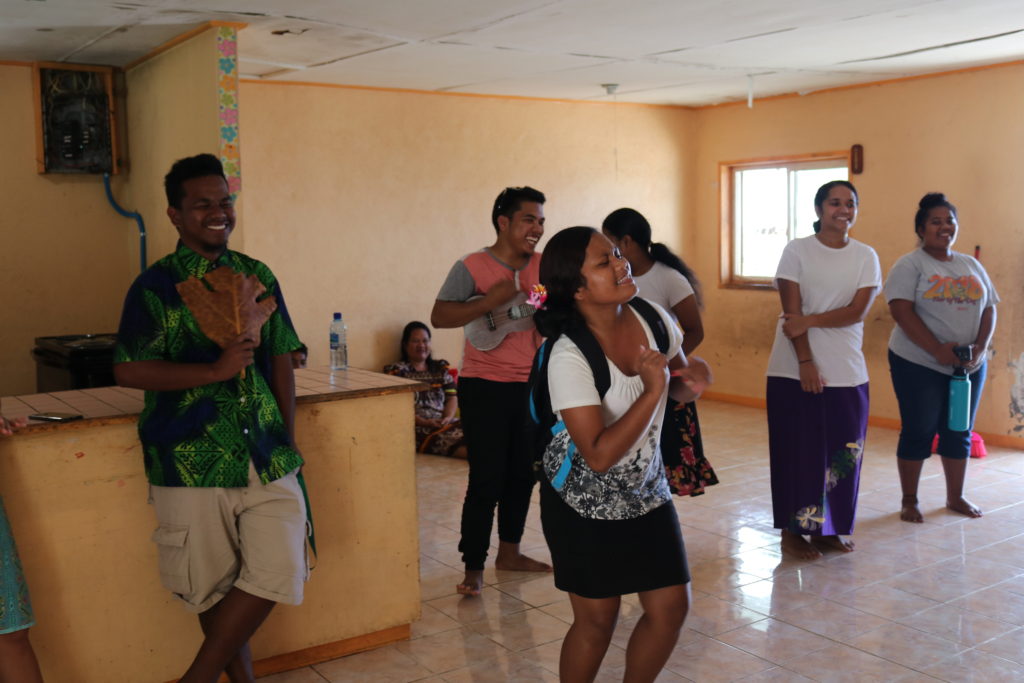
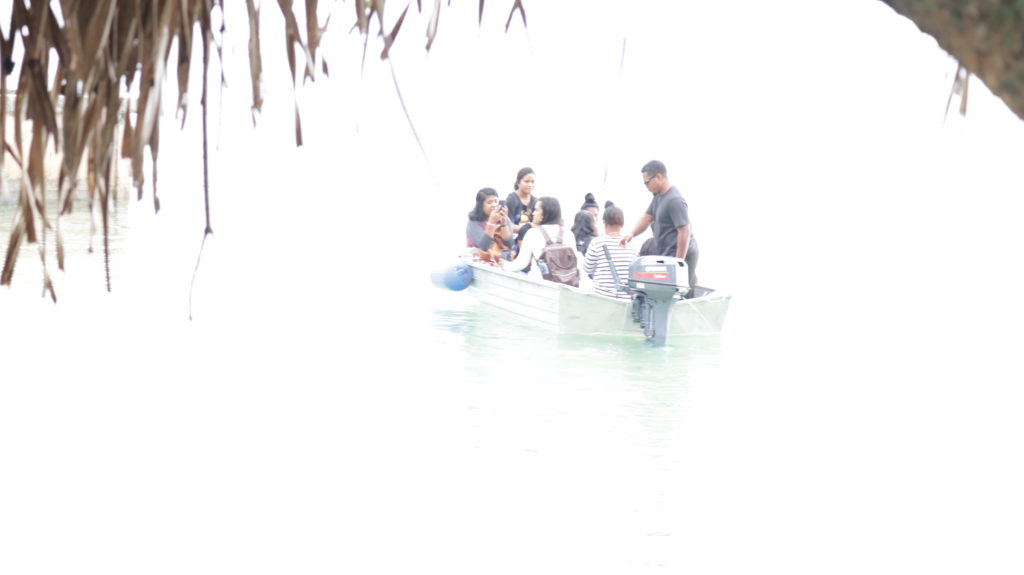
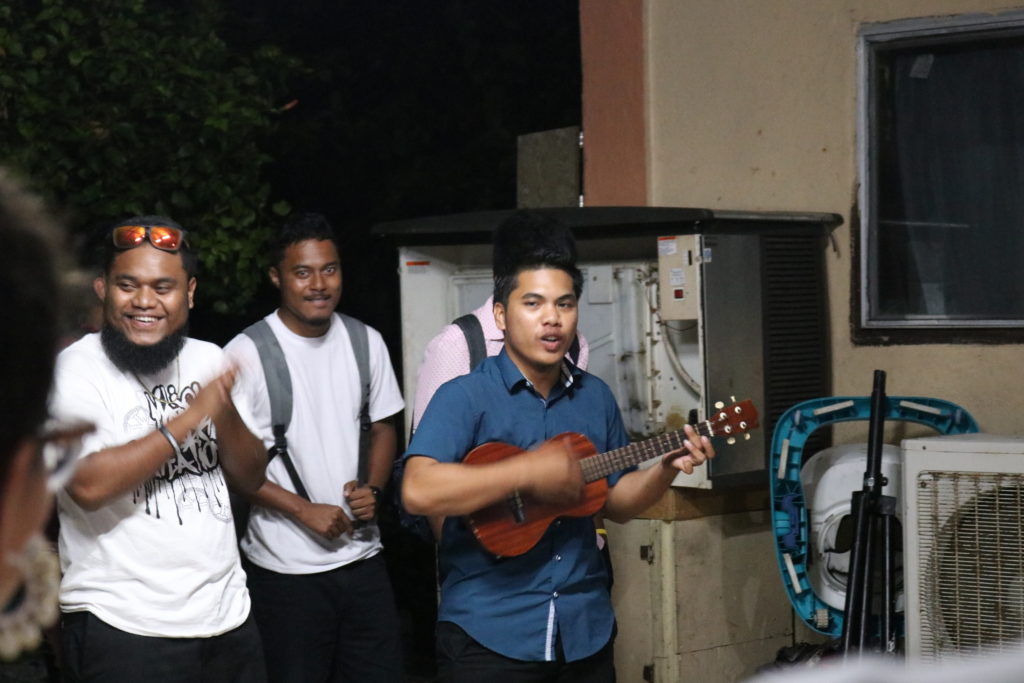
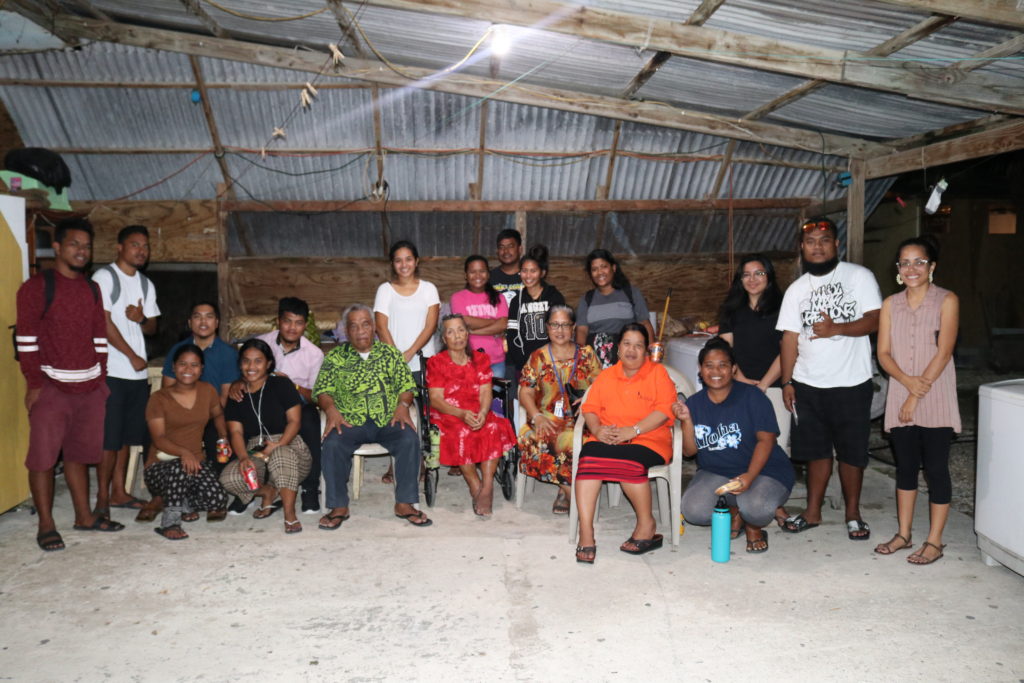
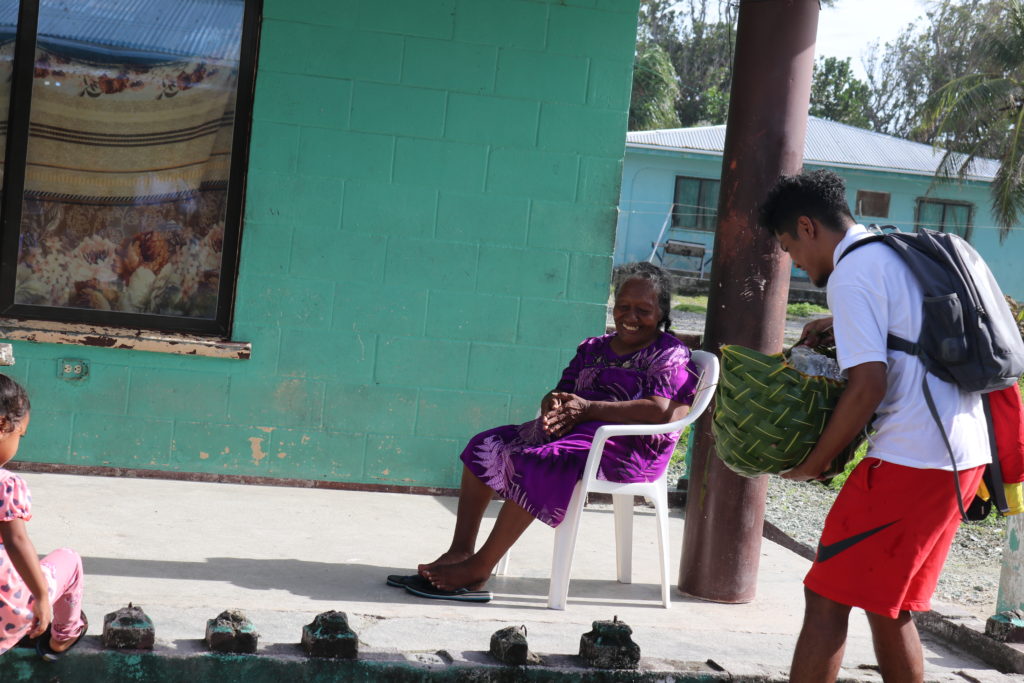
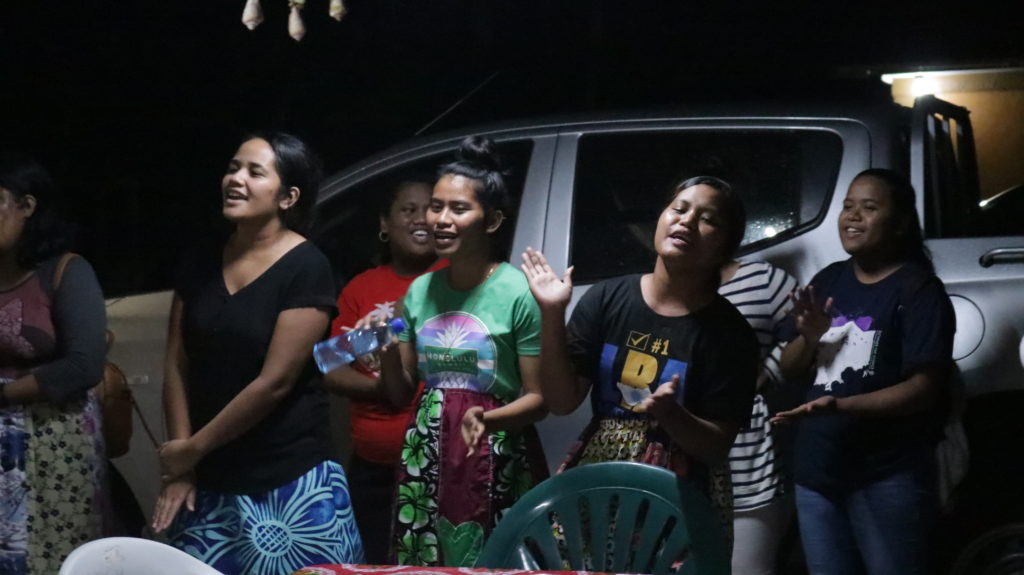
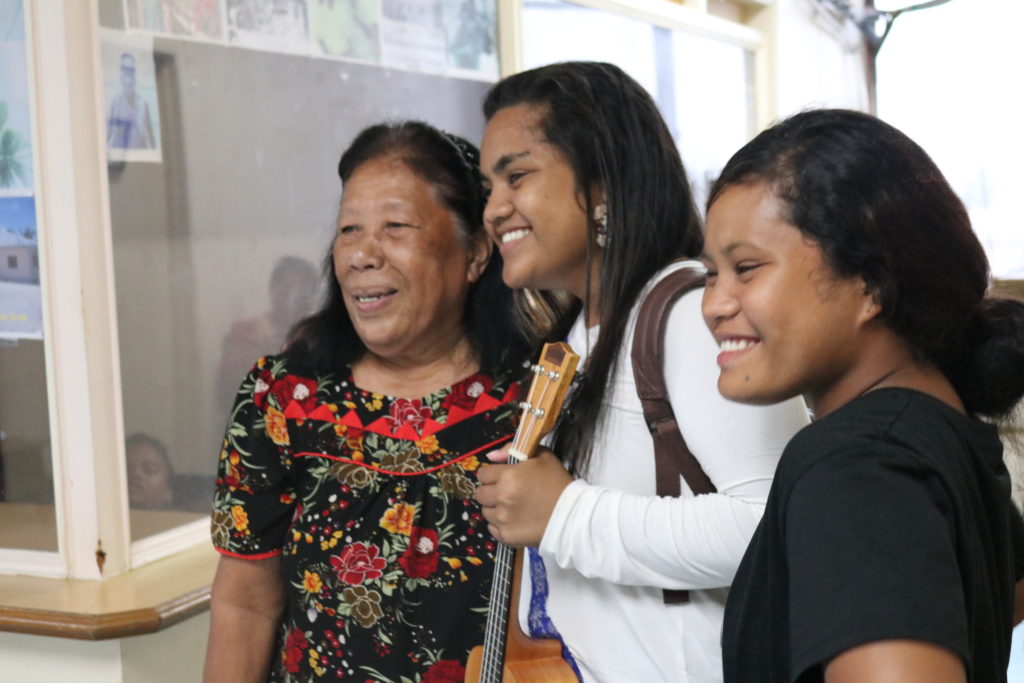
An idea was raised that was inspired by a Marshallese New Years tradition. During New Years Eve, Marshallese children and youth will go house to house, singing a New Years song. For their songs, they’re generally rewarded candy and food by the household. We took this tradition, and decided we’d gather a group of youth and have them visit the elders from the 4 atolls, those who experienced the testing in some form, and visit them house to house, singing songs to them to honor their experience. And instead of getting food, we’d bring food to them – traditional Marshallese food in woven baskets called banninur.
It was quite a bit of work to organize the visits, coordinate rides, food, as well as track down and visit each elder. We were thankful that we played a small role in coordinating the banninur and also bringing our own members to participate in the visits, but ultimately much of the credit needs to be given to the College of the Marshall Islands Nuclear Club and the Nuclear Commission. All this effort was worth it, to see these elders light up, as well as share their own experiences of the testing.
This was an action, led by our youth, that was locally-involved. There’s something to be said about the fact that this wasn’t done for an international audience – as so much of our campaigning tends to be. This was an intergenerational moment that was as much for our youth as for our elders, and was meant to do nothing more than honor our elders and grieve with them over their experiences.
For myself, with all of my international campaigning background, this was a very powerful and moving experience to be a part of. And luckily, it was captured on film. Please see the video below.
-Kathy Jetnil-Kijiner, Jo-Jikum Director
Photos and video by Corrie Lejjena
